The Collection · 弹拨
Lutes
Pear-shaped and round-bodied plucked lutes.
1 prototype listings · checkout disabled
What is a lutes?
The pipa is a pear-shaped, fretted lute. It migrated from Central Asia into China during the Han and Sui dynasties; its name comes from the two directions of the plectrum stroke, p'i (forward) and p'a (backward). Until the mid-tenth century it was held horizontally and its twisted silk strings were plucked with a large triangular plectrum. Toward the end of the Tang dynasty musicians began using their fingernails, and the instrument came to be held more upright.
Sourced in the knowledge atlas — independent of the listings below.
In this family
Illustrative listings — checkout disabled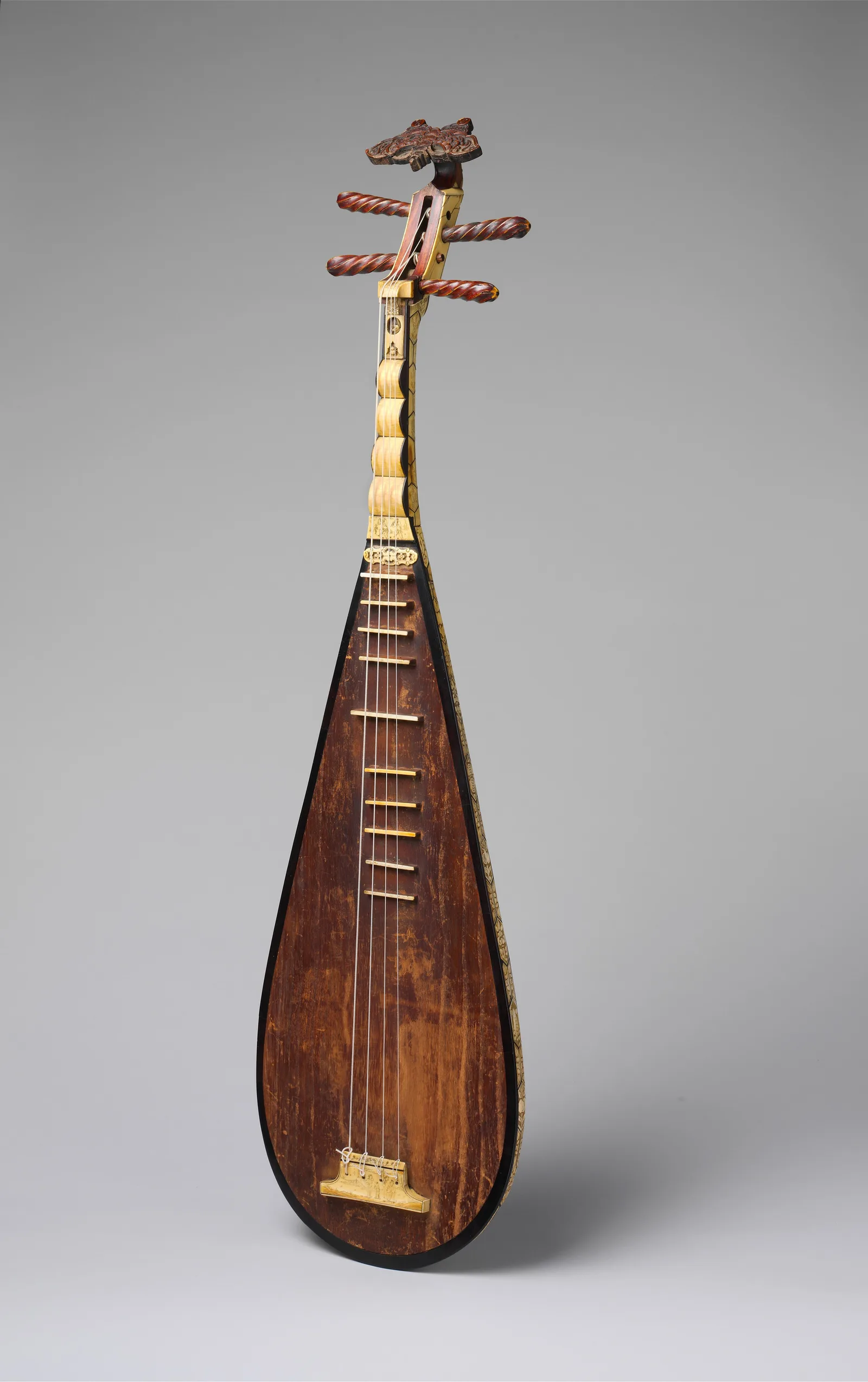
No instruments match those filters.
A note on choosing
Choosing your lutes
A pear-shaped lute is bright and projectable, with a large number of frets for playing across registers. Look for stable strings, an even action across the frets, and a body wood that is not restricted — maple gives a clear tone without the CITES issues of some rosewoods. It is a step up from a first string instrument.
Good to know
Frequently asked questions
Is the pipa suitable for a complete beginner?
It is playable from the start, but the right-hand plucking technique and 24 frets ask a little more than a first zither or flute. It suits someone who already knows whether they want a plucked instrument.
What are the frets for?
The frets let you play accurate pitches across a wide range. A modern pipa typically has 24, set out in equal temperament, which makes it easier to play alongside other instruments.
How is it held?
It rests upright on the lap or a support, held against the body and played with a plectrum or fingernails. A case and plectrums are included.
Image credits
- A pipa in the collection of The Metropolitan Museum of Art — The Metropolitan Museum of Art (Open Access) · CC0https://commons.wikimedia.org/wiki/File:Pipa%20MET%20DP216711.jpg
Licensed demonstration photographs of the instrument type, not photographs of the items for sale.