The Collection · 拉弦
Bowed strings
The huqin family — erhu and other bowed fiddles.
1 prototype listings · checkout disabled
What is a bowed strings?
The erhu belongs to the huqin family of two-stringed fiddles, which were introduced into China by nomadic Mongols during the Yuan dynasty; the element hu in the name marks it as a foreign import. The bow hair passes between the two strings, and the instrument is played vertically on the knee, fingered with the left hand and bowed with the right. It is heard in traditional ensembles, modern orchestras and solo performance, and in opera.
Sourced in the knowledge atlas — independent of the listings below.
In this family
Illustrative listings — checkout disabled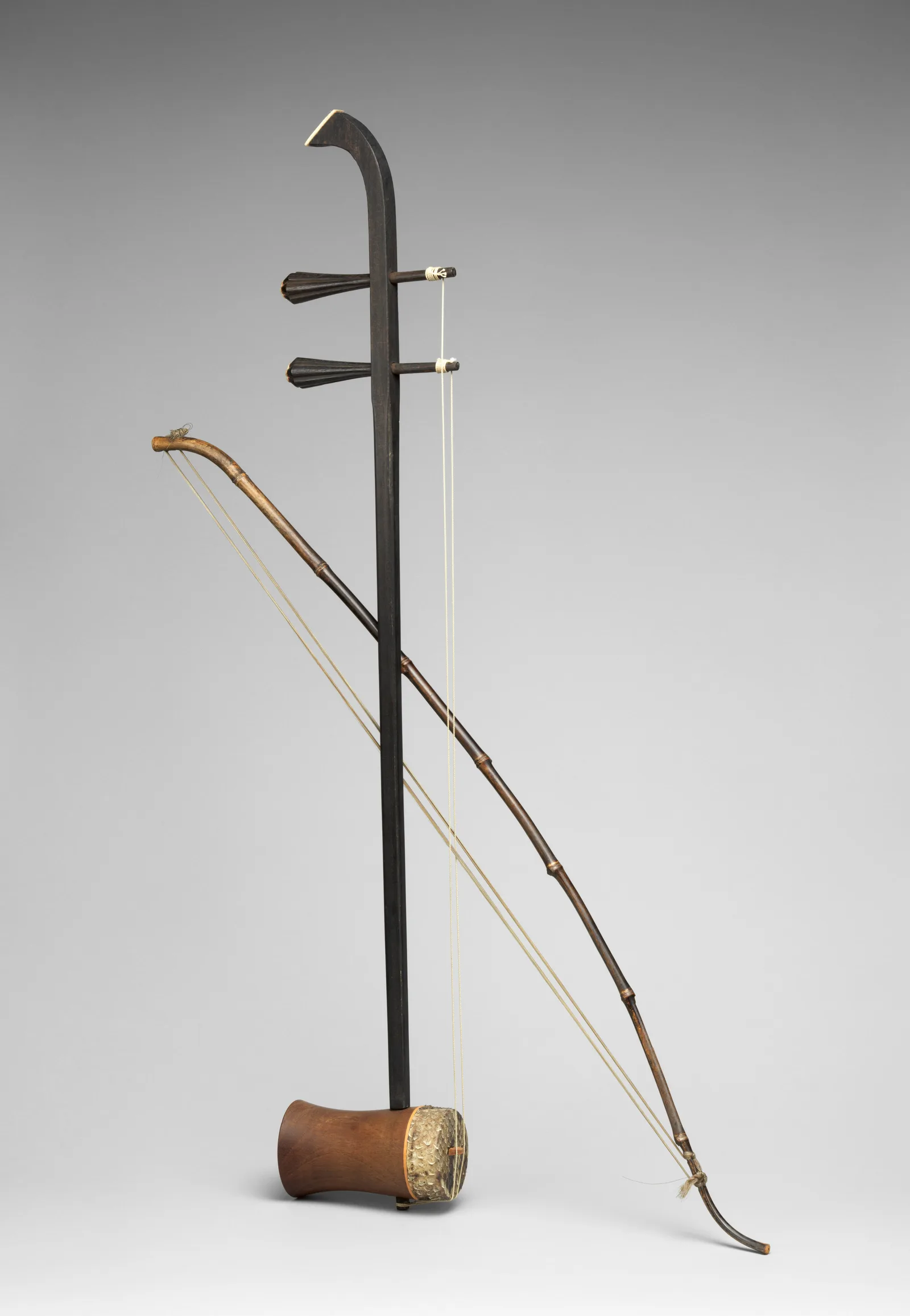 Synthetic$219.00
Eco-Huqin Erhu with PET Membrane
环保膜二胡
The voice of the erhu, without the python skin.
No instruments match those filters.
A note on choosing
Choosing your bowed strings
A bowed fiddle is played upright, with the bow hair passing between two strings. The membrane is the thing to pay attention to: traditional python skin gives the classic voice but brings CITES paperwork, while a synthetic membrane keeps the sound and removes the permit problem. For most learners and for anyone shipping internationally, a modern membrane is the practical choice.
Good to know
Frequently asked questions
Why are some erhus described as "CITES-free"?
Traditional erhus use python skin, which is regulated. A CITES-free erhu uses a synthetic membrane instead, so no wildlife material or permit is involved.
Does a synthetic membrane sound different?
It keeps the familiar erhu voice and is more stable in humidity and temperature. You trade a little of the traditional character for much greater reliability and easier shipping.
Is the erhu hard to learn?
The bowing is unusual because the hair passes between the strings, but the instrument is small, portable and forgiving once you have the basic grip. It is a common first bowed instrument.
Image credits
- An erhu in the collection of The Metropolitan Museum of Art — The Metropolitan Museum of Art (Open Access) · CC0https://commons.wikimedia.org/wiki/File:Erhu%20in%20the%20Mets.jpg
Licensed demonstration photographs of the instrument type, not photographs of the items for sale.